
Montessori Curriculum
Practical Life
Practical Life work teaches a child to pour, button, and sweep. It is the first area a child meets in a Montessori classroom, and for good reason. Every other area of the curriculum - from the sensorial materials to language and math - rests on the coordination and confidence built here.

What your child actually does
A three-year-old carries a small pitcher of water and pours it into a glass, stopping before it spills. A four-year-old buttons a frame with five fasteners, each one slightly different. A five-year-old peels a banana and slices it into rounds for the morning snack table. These are not games. They are real tasks, sequenced from simple to complex, that a child repeats until the movement belongs to them.
The four aims
Every Practical Life activity sequences toward four aims: order, concentration, coordination, and independence. Order means the materials sit on the shelf in the same spot, left to right, so the child knows where to find them and where to return them. Concentration grows as a child repeats a single task for twenty minutes, undisturbed. Coordination is the hand learning to carry a tray level, to twist a lid, to squeeze a sponge. Independence is the result: the child who no longer needs to ask for help.
Care of self and care of environment
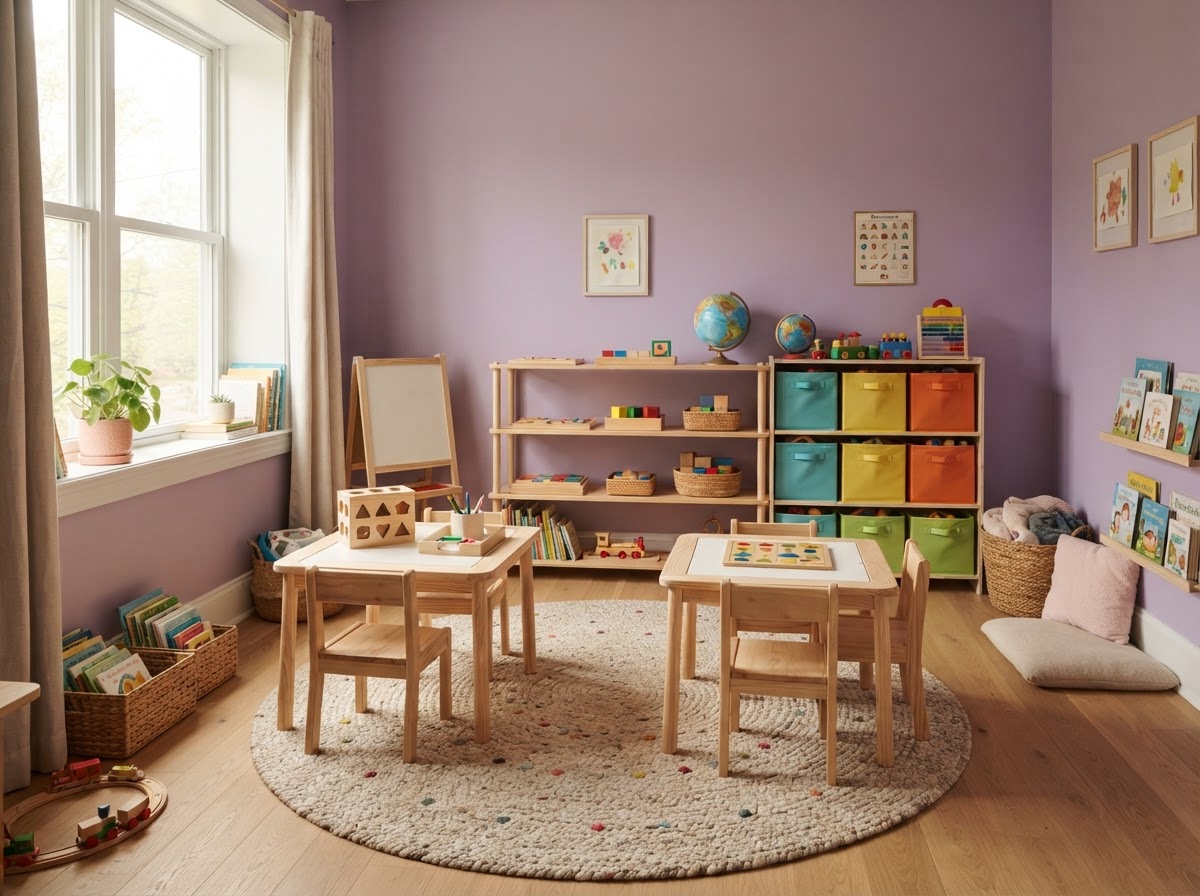
The work splits into two streams. Care of self covers dressing frames - the button frame and the zipper frame - and food preparation. A child learns to serve themselves, to set a place, to wash their hands at a basin. Care of environment covers sweeping and table washing. The child polishes a mirror and sees their own face shine back. They sweep crumbs into a dustpan and empty it. The room belongs to them because they maintain it.
Grace and courtesy
Practical Life includes the social graces. A guide demonstrates how to close a door quietly, how to push in a chair, how to offer a tissue, and how to wait for a turn. Children practice greeting a visitor by name and shaking hands. These lessons seem small. They are not. A child who knows how to move through a room with awareness of others is a child who can learn anything.
Control of error
The materials carry their own correction. Water spills on the tray, and the child sees it and wipes it up. A button does not fit through the wrong hole. The zipper either closes or it does not. The guide does not step in to fix the mistake. The material itself shows the child what went wrong, and the child tries again. This is control of error, and it teaches persistence without shame.
What a parent sees at home
The child who has learned to pour and sweep at school starts doing it at home without being asked. They pour their own milk and wipe the counter. They hang their coat on a low hook instead of dropping it on the floor. The independence built in the classroom walks out the door with them. When you visit our school, you will see children moving through this work with a calm focus that surprises most adults. You can support it at home by giving your child real tools at their size - a small broom, a low shelf for their dishes, a step stool at the sink, and a hook at their height. The prepared environment extends into the kitchen and the bedroom.
Where it leads
Practical Life prepares the hand and the mind for the rest of the curriculum. The child who can pour and spoon is ready for the precise movements of sensorial work. You can also see how all five areas fit together in our overview of the Montessori classroom.