Montessori Curriculum
Geography & Culture
Geography begins with a globe a child can touch. The land is rough, the water is smooth, and the difference is felt in the fingertips before it is named. From that one sphere, the Montessori geography curriculum opens outward into continents, cultures, plants, and animals.

What your child actually does
A three-year-old traces the sandpaper globe, feeling the continents rise under their fingers. A four-year-old carries a puzzle map piece by piece, placing Africa and South America into their frames. A five-year-old pours water into a land and water form tray and names what they see: lake, island, gulf, peninsula. The work moves from the whole planet down to the leaf of a single plant, and the child follows each step outward.
Cosmic education, in plain terms
Cosmic education is the idea that everything connects. The sun warms the soil, the soil feeds the plant, the plant feeds the child, the child learns to care for all of it. Montessori does not teach geography, biology, and history as separate subjects. One curriculum threads them together so a child sees the world as a whole, not as shelves of disconnected facts. The guide presents the planet first, then the life on it, then the people who live on it.
Land and water forms
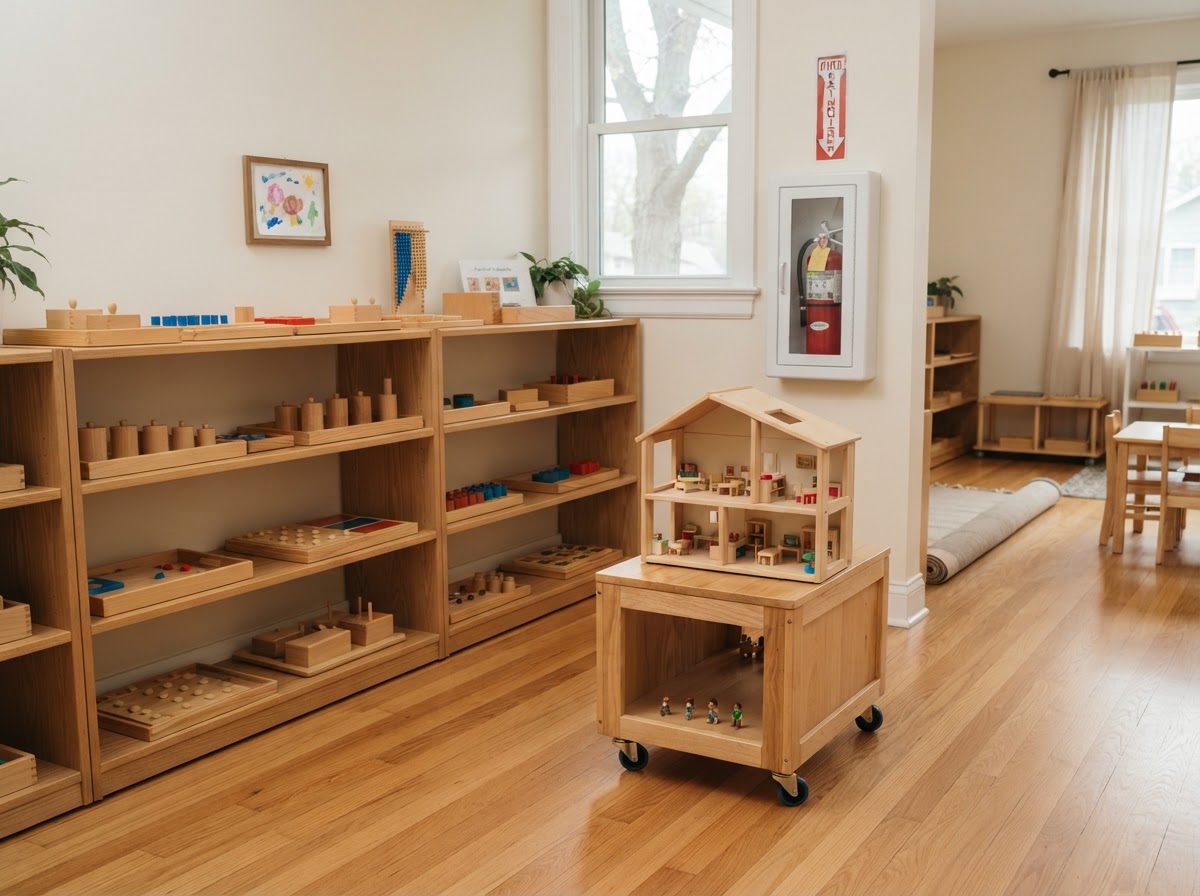
The child meets the shapes of the earth before they meet its names. The land and water form trays hold clay and water. The child pours and sees an island rise from the water, a lake sink into the land. They build a peninsula, an isthmus, a gulf. The sandpaper globe comes first, rough land and smooth water under one hand. Then the puzzle maps, each continent a piece the child lifts and returns. The guide names what the child already touched.
Continents and cultures
The continent boxes open the world. Each one holds artifacts, photographs, and flags from a different part of the earth. A child in Claremont holds a small wooden figure from a classroom in Kenya and asks what children there eat for lunch. The flags of nations line a shelf, and the child matches them to their puzzle map. The guide presents the culture, not as exotic, but as the way another family lives. Respect grows from holding, not from hearing about.
How botany and zoology sit inside
Plants and animals belong to geography because they belong to the earth. The botany cabinet holds leaf shapes a child traces and names: lanceolate, orbicular, linear. Real seeds are planted in real soil, and the child waters them and waits. The zoology materials sort living things by what they eat and how they move. A child who has classified a vertebrate and an invertebrate carries that framework outside, to the pigeon on the sidewalk and the beetle in the garden. The curriculum does not end at the shelf.
Where it leads
Geography and culture work rests on the communication a child builds in Language. You can see how all five areas connect in our overview of the Montessori classroom, or come visit our school and watch a child build a puzzle map of the world with their own hands.