
Montessori Curriculum
Language
Language begins with listening, not with letters. A child hears the sounds of speech for years before their hand ever traces a sandpaper letter. The Montessori language curriculum sequences from that spoken foundation straight into writing and reading.

What your child actually does
A three-year-old traces a sandpaper letter and says its sound, not its name. A four-year-old builds words with the movable alphabet, picking out c-a-t and d-o-g from a box of wooden letters. A five-year-old reads a phonetic card, matches it to an object on the table, and moves on to the next one. The work moves from sound to symbol to word to sentence, and the child follows each step at their own pace.
Phonetic awareness first
Before a child meets a letter, they learn to listen. The guide presents a game: find something in the room that starts with buh. Ball. Book. Bell. The child sorts objects by their beginning sound, then by their ending sound, then by the middle. This is phonetic awareness, and it comes before letter names. A child who knows the sound buh makes is ready for the letter b. A child who has only memorized its name is not.
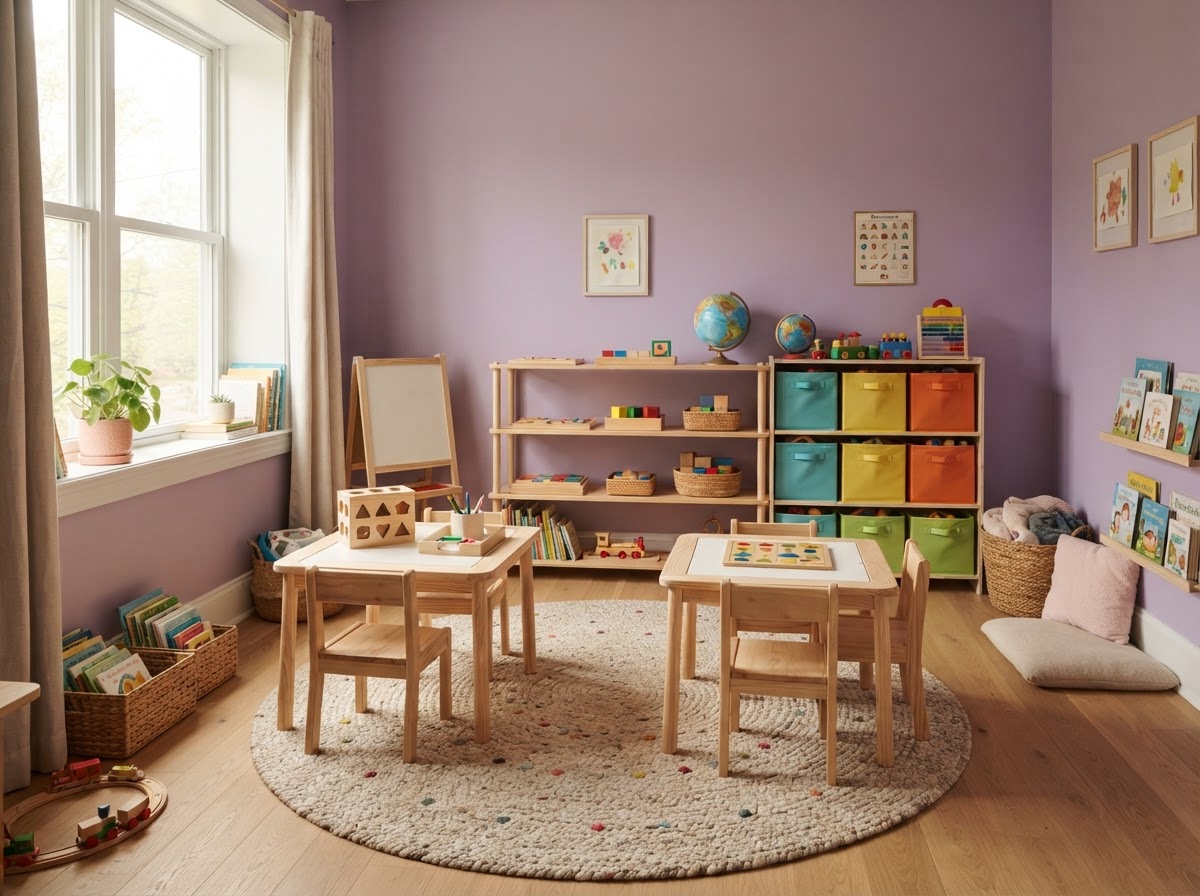
Writing before reading
Writing comes before reading in Montessori. The metal insets train the hand to move in the strokes a letter requires. The sandpaper letters give the child the sound and the shape at once, through touch. The movable alphabet lets a child build words before their pencil can form them. A four-year-old spells s-u-n on a rug, letter by letter, reading it back to themselves. Reading arrives when the child can decode what they have already written.
The three-period lesson
The guide teaches each new material through the three-period lesson. First period: This is a. The guide traces the sandpaper letter and says the sound. Second period: Show me a. The child finds it among two others. Third period: What is this? The child says the sound. If the child cannot answer at the third period, the guide does not correct. They end the lesson and present it again another day. The child never fails. The timing was not right, and the guide waits.
The explosion into reading
Somewhere between four and five, a child who has been building words for months suddenly reads them. This is the explosion into reading. The child picks up a phonetic reading card, decodes it, and looks up with surprise. They move through object boxes and phonetic reading cards, one after another. The guide observes and sequences the next material, but the child drives the moment. It is not taught. It arrives.
Where it leads
Language work rests on the concentration and coordination a child builds in Practical Life. You can see how all five areas connect in our overview of the Montessori classroom, or come visit our school and watch a child build their first word with the movable alphabet.